Is It Safe to Wear a Watch in the Shower? The Truth About Water, Steam & Soap (2026)
Many watches are labeled water-resistant, yet moisture damage remains one of the top reasons watches fail. The problem isn’t just water — it’s heat, steam, soap, and habit.
This guide explains what really happens to a watch in the shower, why even expensive watches get damaged, and what you should do instead.
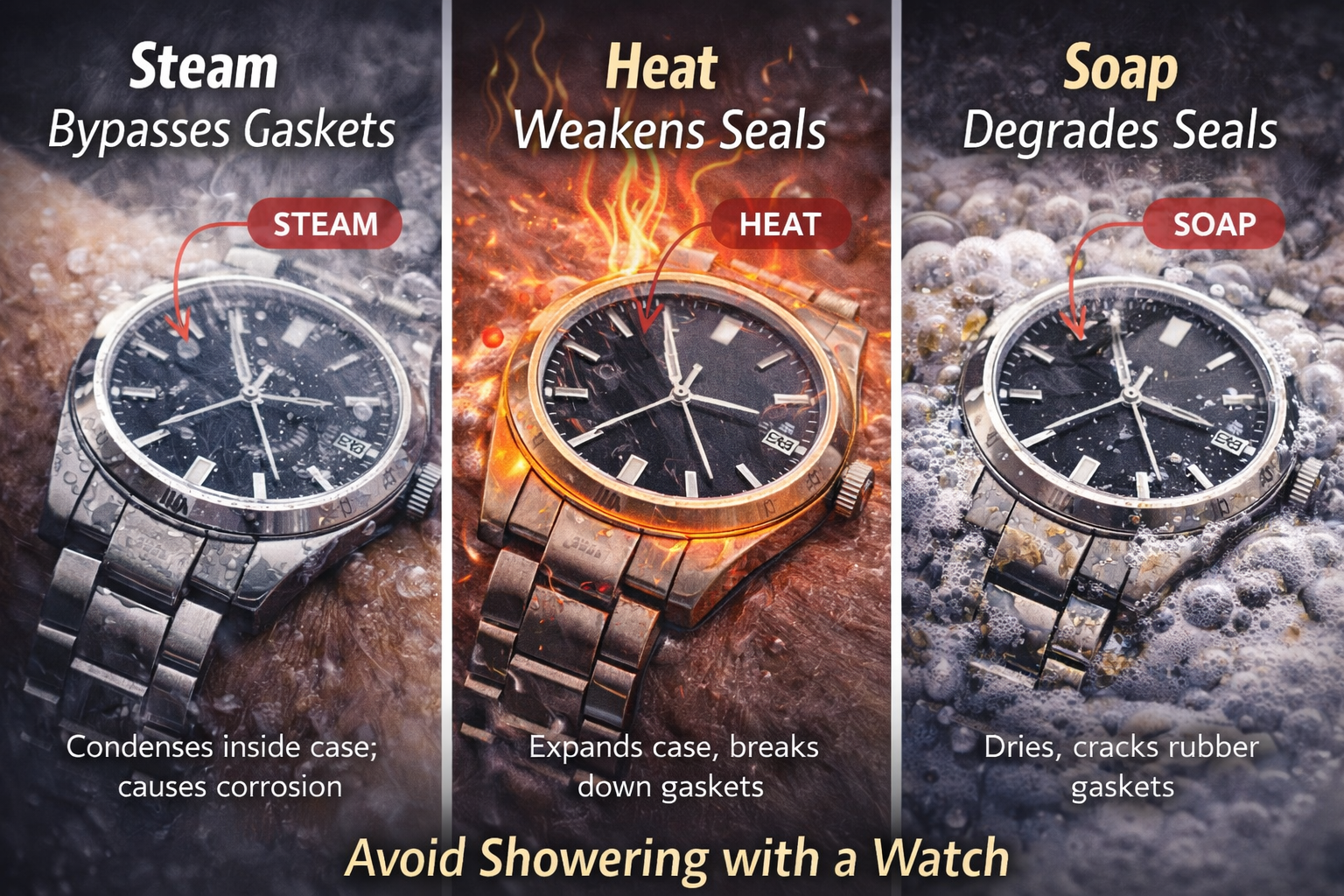 Short Answer: Showering With a Watch Is Not Recommended
Even if your watch is water-resistant, daily shower use is risky.
Why?
-
Steam penetrates seals more easily than liquid water
-
Heat expands metal and weakens gaskets
-
Soap and shampoo degrade rubber seals
Water resistance ≠ shower resistance. Showering with a watch is one of the most common watch care mistakes that slowly ruin water resistance and lead to expensive internal damage.
How Showers Damage Watches
1. Steam Is More Dangerous Than Water
Steam particles are extremely small and can:
-
Bypass aging gaskets
-
Condense inside the case
-
Cause long-term internal corrosion
This is why fogging often appears after a shower, not during — something proper daily watch care habits are designed to prevent.
2. Heat Breaks Down Seals Faster
Hot water causes repeated expansion and contraction of:
-
Case
-
Crystal
-
Crown tube
Over time, this weakens gasket integrity — even on dive watches.
3. Soap & Shampoo Attack Gaskets
Soaps contain chemicals that:
-
Dry out rubber seals
-
Reduce elasticity
-
Shorten water-resistance lifespan
Once gaskets degrade, even hand washing becomes risky.
What About Dive Watches?
Dive watches are designed for:
-
Cold or neutral water
-
Static pressure
They are not designed for:
-
Hot steam
-
Daily soap exposure
-
Repeated temperature shock
Professional divers remove watches before showering — and so should you.
Signs Shower Use Has Already Caused Damage
Watch for:
-
Fog under the crystal
-
Rust spots on hands or dial
-
Sudden accuracy changes
-
Crown stiffness
If you see fog, stop wearing the watch immediately and seek professional service.
Safe Alternatives to Showering With a Watch
Better habits:
-
Remove your watch before showering
-
Place it in a dry, shaded spot and store watches properly when not wearing them.
-
Wipe it down after workouts instead
This simple change can extend gasket life by years.
When Is It Okay to Get a Watch Wet?
Generally safe:
-
Hand washing
-
Light rain
-
Accidental splashes
Still avoid:
-
Hot tubs
-
Saunas
-
Steam rooms
Heat + moisture is the real enemy.
Common Myths About Showering With Watches
-
“My watch is 100m water-resistant” ❌
-
“I’ve done it for years with no issues” ❌
-
“Soap cleans the watch” ❌
Damage is cumulative — not instant.
Conclusion
Showering with a watch feels harmless, but it’s one of the most common habits that quietly destroy water resistance.
Removing your watch before showering is one of the easiest, most effective care habits you can adopt.
Related Guides:
-
10 Watch Care Mistakes That Ruin Your Watch Faster Than You Think (2026)
-
How to Store Watches Properly When Not Wearing Them (2026)
-
Everyday Watch Care Guide: How to Keep Your Watch Looking New (2026)