Can You Wash Your Hands With a Watch On? What’s Safe & What’s Not
 Short Answer (Read this first)
Yes, hand washing with a watch on is usually safe for many watches—as long as you keep the crown sealed, avoid hot water/steam, and rinse off soap residue. The biggest risks are a loose crown, repeated hot water exposure, and soap pushing past aging gaskets. If you see fogging afterward, moisture may already be inside.
The 3 rules that prevent most water damage
Rule #1: Keep the crown fully secured
-
If your watch has a screw-down crown, make sure it’s screwed down before washing.
-
Never pull the crown or adjust time/date with wet hands.
Rule #2: Avoid hot water (heat changes everything)
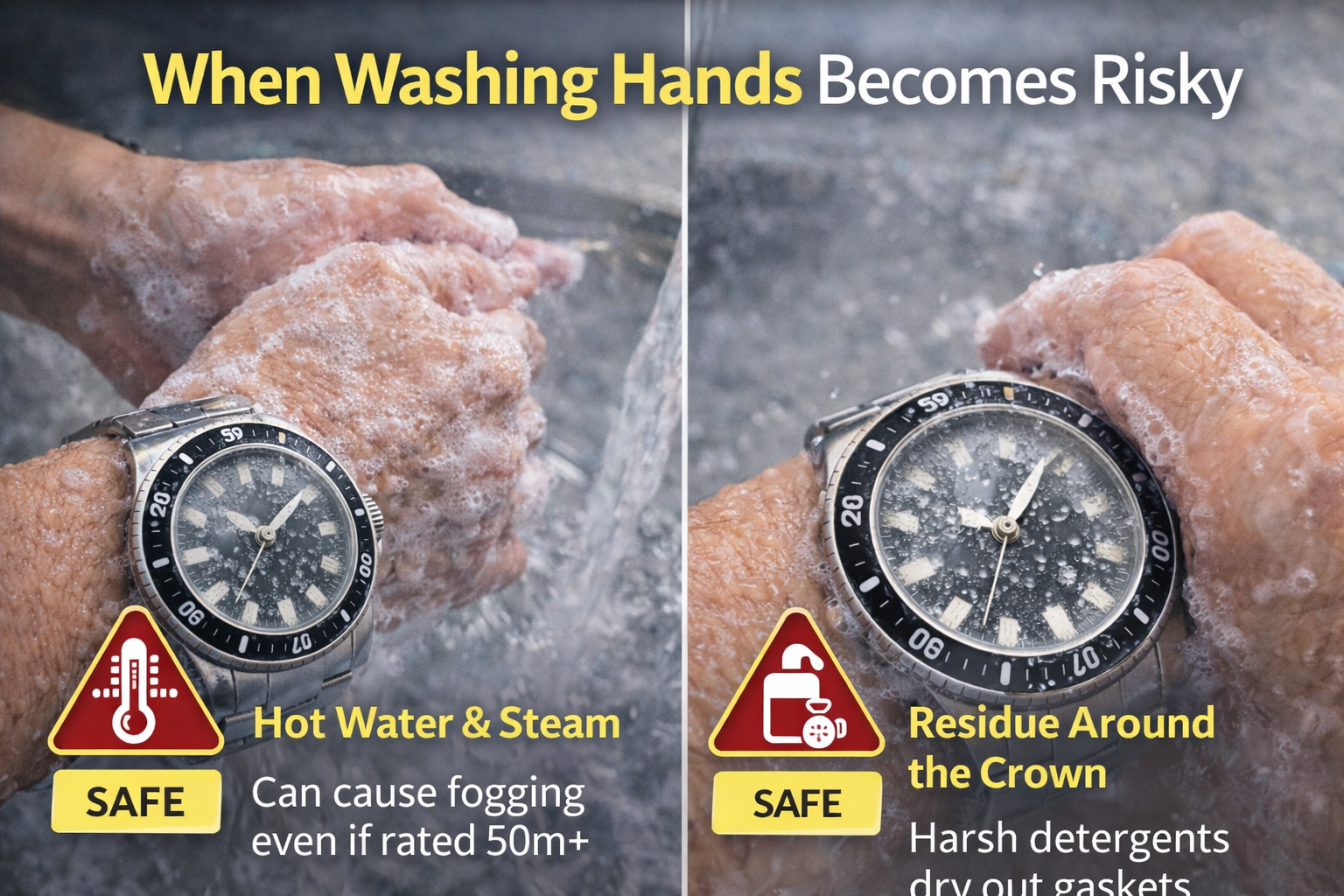
Warm/hot water creates temperature swings that increase condensation risk. If you tend to wash hands with hot water, treat it more like a “mini shower” risk scenario.
Related (steam/heat):
→ Shower risk explained: https://www.globalwatchindustry.com/blogs/wear-watch-in-the-shower
→ Sauna/hot tub risk: https://www.globalwatchindustry.com/blogs/-watch-sauna-hot-tub-damage-
Rule #3: Don’t let soap sit around the crown
Soap and detergents can reduce gasket lubrication and leave residue around the crown/caseback.
Best practice: wash hands, then quickly rinse the watch exterior (only if crown is sealed), then dry.
What water resistance rating do you need for hand washing?
Hand washing is usually “splash-level,” but real life includes pressure from taps and rubbing.
A simple guideline:
-
30m / 3ATM: often OK for splashes, but be cautious (older seals = risk)
-
50m / 5ATM: generally OK for hand washing
-
100m+: comfortably OK for hand washing (still avoid hot water/steam)
If you want the full, accurate breakdown of what the ratings really mean:
→ https://www.globalwatchindustry.com/blogs/-watch-water-resistance-explained-
When washing hands becomes risky
1) You use very hot water
Hot water + cool air afterward = condensation risk, especially if seals are aging.
2) Your watch is older or never pressure-tested
Gaskets degrade. A watch that was fine last year can suddenly start fogging.
Service guidance:
→ https://www.globalwatchindustry.com/blogs/-mechanical-watch-service-interval-
3) You wash with chemicals often
-
Household detergents
-
Degreasing soaps
-
Sanitizers that creep into crevices (and can dry out materials over time)
Pool/ocean exposure is harsher than hand soap, but the principle is similar (chemicals + seals):
→ Chlorine: https://www.globalwatchindustry.com/blogs/-does-chlorine-damage-watches-
→ Saltwater: https://www.globalwatchindustry.com/blogs/-salt-water-watch-damage-
Quick self-check after washing hands
Safe signs
-
No fogging
-
No moisture ring under crystal
-
Watch runs normally
Warning signs
-
Haze or fogging under the crystal (even if it clears)
-
Droplets under the crystal
-
Crown feels gritty or stiff
-
Sudden accuracy change after repeated wet use
If you see fogging, follow this guide:
→ https://www.globalwatchindustry.com/blogs/watch-fogging-under-crystal-causes-fixes
If you suspect actual water got inside, use the emergency plan
→ https://www.globalwatchindustry.com/blogs/water-inside-watch-what-to-do-immediately
Best practices (30-second routine)
-
Check crown (secured)
-
Wash hands normally (avoid blasting the watch directly under high-pressure tap)
-
Rinse any soap off the watch exterior (only if crown sealed)
-
Dry with a soft cloth—especially around the crown area
FAQ
1) Can I wash my hands with a 30m watch?
Sometimes, but it’s borderline—especially if the watch is older or the crown isn’t tight. If you do it often, 50m+ is safer.
→ https://www.globalwatchindustry.com/blogs/-watch-water-resistance-explained-
2) Is 50m water resistance enough for daily hand washing?
Generally yes, as long as the crown is secured. For swimming, it’s a different question:
→ https://www.globalwatchindustry.com/blogs/-is-50m-water-resistance-enough-
3) Why did my watch fog up after hand washing?
Moisture likely entered through the crown or aging seals, then condensed.
→ https://www.globalwatchindustry.com/blogs/watch-fogging-under-crystal-causes-fixes
4) Can soap damage water resistance?
Soap can remove lubrication and leave residue around seals, increasing risk over time—especially with hot water/steam.
→ https://www.globalwatchindustry.com/blogs/wear-watch-in-the-shower
5) What should I do if I see droplets under the crystal?
Treat it as urgent and follow the immediate steps:
→ https://www.globalwatchindustry.com/blogs/water-inside-watch-what-to-do-immediately
6) Should I service my watch just because I washed hands with it?
Not necessarily. But repeated fogging, crown issues, or older watches should be checked.
→ https://www.globalwatchindustry.com/blogs/-mechanical-watch-service-interval-
Suggested internal link block
Related Guides
-
https://www.globalwatchindustry.com/blogs/-watch-water-resistance-explained-
-
https://www.globalwatchindustry.com/blogs/wear-watch-in-the-shower
-
https://www.globalwatchindustry.com/blogs/-watch-sauna-hot-tub-damage-
-
https://www.globalwatchindustry.com/blogs/watch-fogging-under-crystal-causes-fixes
-
https://www.globalwatchindustry.com/blogs/water-inside-watch-what-to-do-immediately
-
https://www.globalwatchindustry.com/blogs/-is-50m-water-resistance-enough-