Sand in Your Watch Bezel? How to Remove It Safely (Without Ruining Seals)
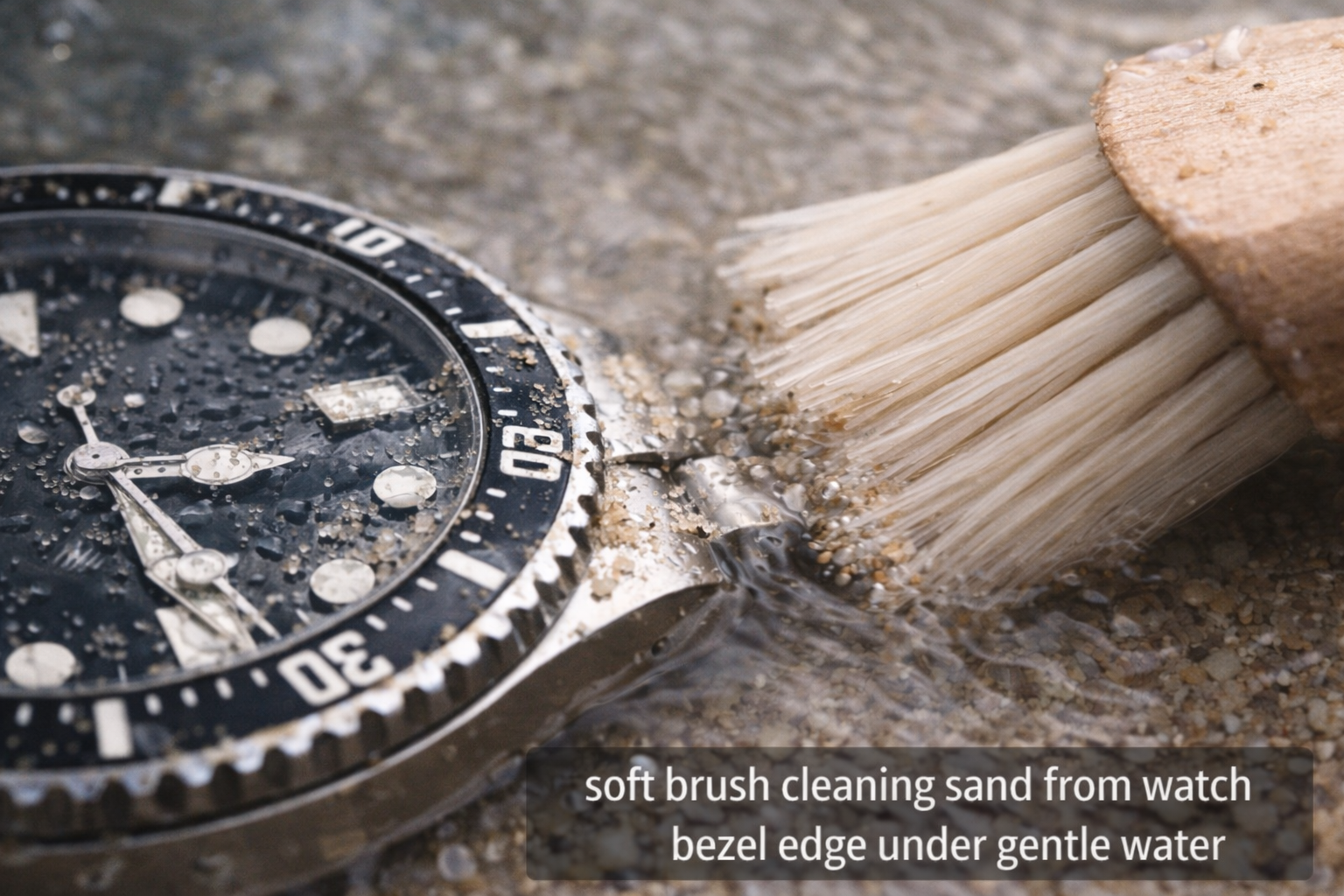 If sand gets into your watch bezel, don’t force-rotate it and don’t use high-pressure water. The safest approach is to rinse with gentle fresh water (only if the crown is sealed), soak briefly, then use a soft brush to lift grit away. If the bezel remains gritty, clicks feel uneven, or you hear grinding, stop and have it cleaned professionally—forcing it can scratch parts and weaken seals.
Why beach sand is a problem (even if water didn’t get inside)
Sand isn’t just “dirt.” It’s abrasive. It can:
-
jam a rotating bezel (gritty clicks, stuck rotation)
-
scratch the bezel insert, crystal edge, or case
-
trap salt residue, accelerating corrosion on metal parts
If you were also in the ocean, saltwater makes this worse:
→Does Salt Water Damage Watches? Ocean Exposure Explained
Before you clean: 2 safety checks
1) Is the crown fully sealed?
If your watch has a screw-down crown, it must be fully screwed down before any rinsing.
Not sure what water resistance actually means in real life?
→Water Resistance Explained: What Watch Depth Ratings Really Mean
2) Did the watch fog afterward?
Fogging suggests moisture may be inside the case—different problem, higher urgency.
→ mediately Why Is My Watch Fogging Under the Crystal? Causes & Fixes (What to Do Now)
If you suspect water inside:
→Water Got Inside Your Watch? What to Do Immediately (First 30 Minutes)
Safe cleaning method (step-by-step)
What you need
-
fresh water (cool/room temp)
-
a bowl or cup for soaking
-
soft toothbrush or very soft detailing brush
-
microfiber cloth
-
optional: mild soap (only for metal bracelet, not leather)
If your watch is 30m rated or you’re unsure about seal condition, avoid soaking/rinsing and go straight to a professional clean.
Ratings reference:
→ Is 50m Water Resistance Enough? What You Can (and Can’t) Do
→ 100m vs 200m Water Resistance: Do You Really Need a Dive Watch?
Step 1: Don’t rotate the bezel yet
If it feels gritty, rotating it can grind sand between parts and create scratches.
Step 2: Gentle rinse (only if crown is sealed)
Hold the watch under a gentle stream of fresh water—avoid blasting the bezel edge.
Step 3: Soak briefly (5–10 minutes)
Place the watch in a bowl of fresh water to loosen sand and salt crystals.
Step 4: Soft brush around the bezel edge
Use a soft brush around:
-
bezel edge and click area
-
lug gaps
-
bracelet links (if applicable)
Brush lightly—your goal is to lift grit out, not scrub metal.
Step 5: Rinse again, then dry thoroughly
Dry with microfiber, then let it air-dry at room temperature.
Pay extra attention to the crown area and bracelet gaps.
Storage tips to prevent trapped moisture afterward:
→ How to Store Watches Properly When Not Wearing Them (2026)
What NOT to do (these cause damage fast)
❌ Don’t use a pressure washer or strong jet
High-pressure water can push grit deeper and can stress seals.
(你刚做的高压水枪那篇也可以互相内链)
❌ Don’t force a stuck bezel
If it’s jammed, forcing it can deform the click spring or grind sand into the mechanism.
❌ Don’t use compressed air
It can blow sand deeper into gaps and may drive moisture into places you don’t want.
❌ Don’t use harsh solvents
Avoid alcohol/acetone/strong cleaners—they can damage seals and finishes.
(你已有酒精消毒那篇也可作为相关阅读)
When to stop and visit a watchmaker
Go professional if:
-
bezel still feels gritty after gentle cleaning
-
bezel is stuck or clicks unevenly
-
you see sand under the bezel insert edge
-
the watch was submerged in saltwater and sand
-
fogging appears afterward
→mediately Why Is My Watch Fogging Under the Crystal? Causes & Fixes (What to Do Now)
Preventing sand problems at the beach
-
Don’t place the watch face-down on sand
-
Rinse with fresh water after beach time (if crown sealed)
-
Avoid rotating the bezel while sandy/wet
-
After ocean exposure, rinse and dry the watch exterior
→ Does Salt Water Damage Watches? Ocean Exposure Explained
If you actually plan to swim, confirm what’s safe:
→ Can You Swim With a Watch? Pool vs Ocean Water Risks Explained
FAQ
1) Can sand ruin a rotating bezel?
Yes. Sand is abrasive and can scratch components or jam the click mechanism if forced.
2) Should I rotate the bezel to “work the sand out”?
No. If it’s gritty, rotating it can grind sand and worsen scratching.
3) Can I rinse my watch at the beach shower?
If the crown is sealed, a gentle rinse can help, but avoid strong jets. Fresh water is best, then dry later.
4) What if I have a 30m watch—can I soak it?
Not recommended. 30m is splash-level and seal condition varies.
→ Water Resistance Explained: What Watch Depth Ratings Really Mean
5) My bezel is still gritty after cleaning—what now?
Stop forcing it and have it serviced/cleaned professionally to prevent wear.
6) Sand + saltwater: what’s the biggest risk?
Salt accelerates corrosion and sand scratches. Rinse early with fresh water (gentle), then dry well.
→Does Salt Water Damage Watches? Ocean Exposure Explained
7) If the watch fogs later, is that from sand?
Fogging usually means moisture entered the case (not just sand).
→ mediately Why Is My Watch Fogging Under the Crystal? Causes & Fixes (What to Do Now)
Emergency steps:
→ Water Got Inside Your Watch? What to Do Immediately (First 30 Minutes)