How to Store Watches Properly When Not Wearing Them (2026)
Improper storage causes rust, mold, dial discoloration, lubricant degradation, and strap failure. The good news? Correct watch storage is simple once you understand a few key principles.
This guide explains how to store watches properly—whether it’s one daily watch or a growing collection.
Why Proper Watch Storage Matters
When a watch sits unused, it becomes vulnerable to:
-
Humidity and condensation
-
Dust and debris
-
Magnetism
-
UV exposure
-
Strap deformation
Poor storage can silently undo all your daily and weekly care habits.
The 5 Golden Rules of Watch Storage
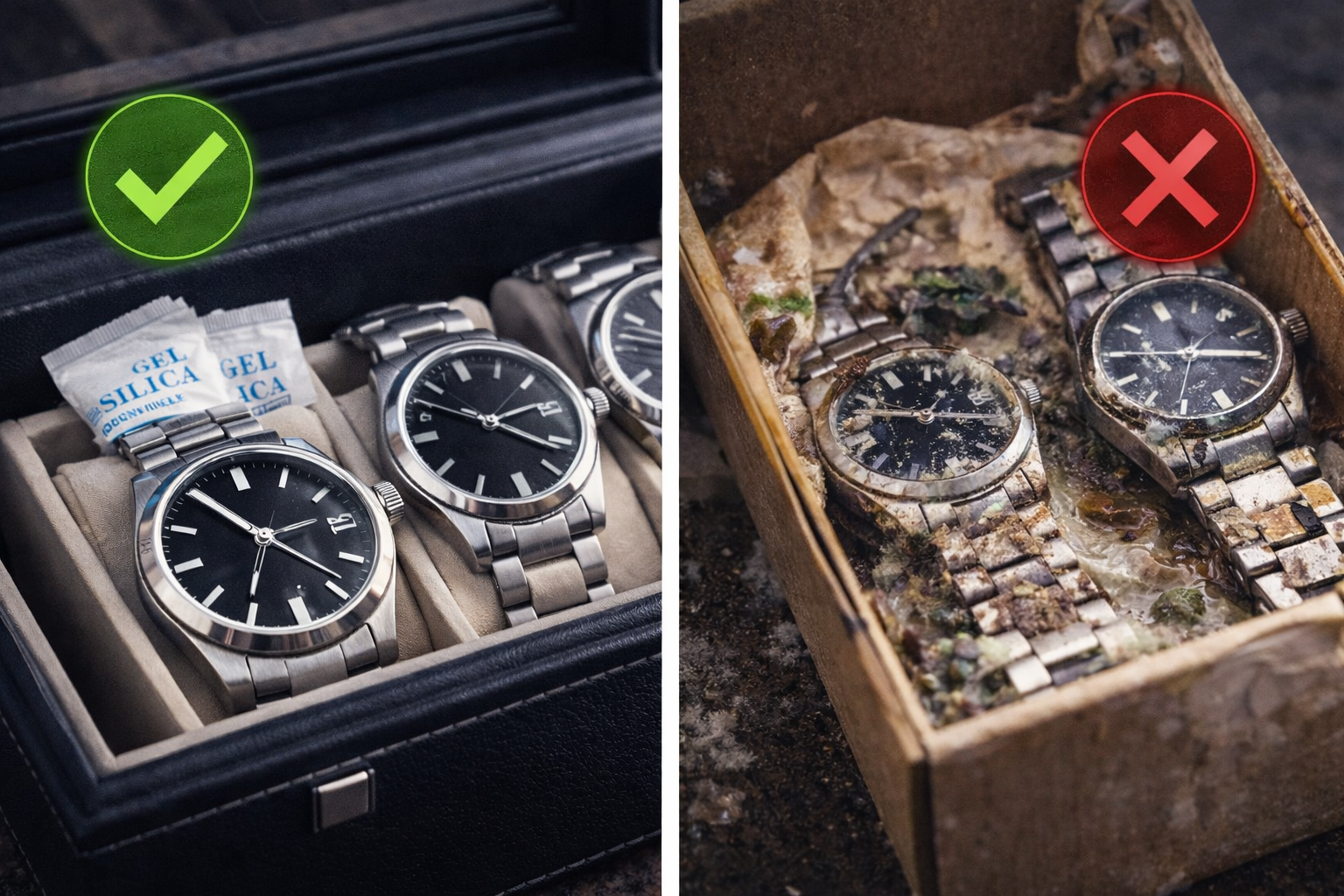 1. Keep Watches Dry (Humidity Is the Enemy)
Humidity is the leading cause of:
-
Rusted movements
-
Fogged crystals
-
Moldy leather straps
Best practice:
-
Store watches in a dry room (not a bathroom)
-
Use silica gel packs in watch boxes
-
Replace silica gel every 3–6 months
2. Avoid Sunlight & Heat
Direct sunlight can:
-
Fade dials
-
Dry out gaskets
-
Crack leather straps
Heat accelerates lubricant breakdown in mechanical watches.
Rule: If you wouldn’t store electronics there, don’t store watches there.
3. Protect Watches From Magnetism
Common magnetic sources:
-
Speakers
-
Phone chargers
-
Laptop covers
-
Tablet cases
Magnetized watches lose accuracy and require demagnetization.
Tip: Keep watches at least 30–50 cm away from electronics.
4. Store Watches Individually
Stacking watches causes:
-
Scratches
-
Bracelet dents
-
Crystal damage
Best options:
-
Watch boxes with cushions
-
Soft watch pouches
-
Separate compartments
Never toss watches loose into drawers.
5. Choose the Right Position
For short-term storage:
-
Dial up is safest
For long-term storage:
-
Lay flat
-
Avoid hanging watches by straps
This prevents unnecessary stress on spring bars and bracelets.
Watch Storage by Watch Type
Mechanical & Automatic Watches
-
Store clean and dry
-
Wind once every 3–4 weeks if not worn
-
Avoid extreme temperature changes
Quartz Watches
-
Remove battery if storing for years
-
Check annually for leakage
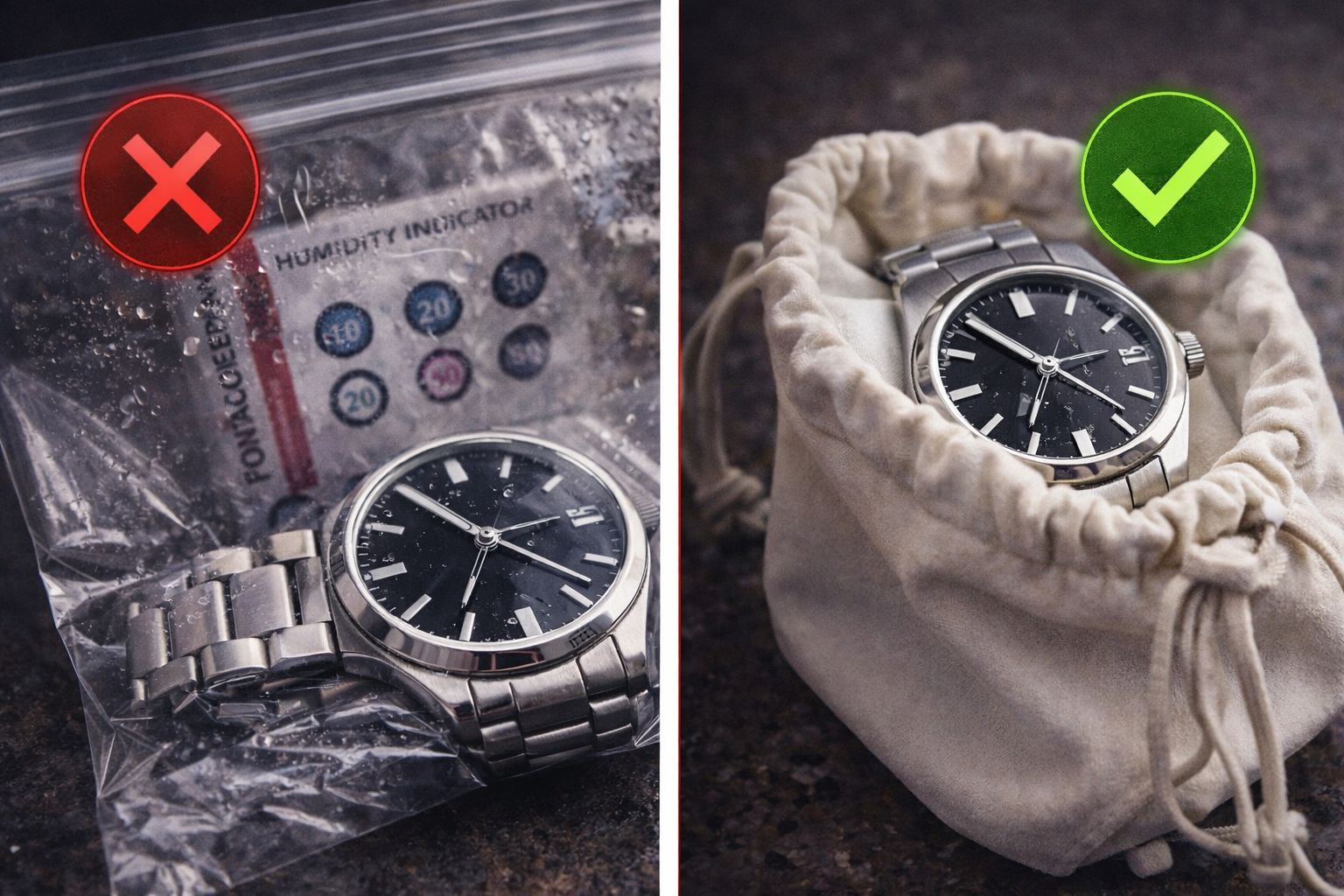
Leather Strap Watches
-
Never store damp
-
Keep away from sealed plastic bags
-
Allow airflow
 Watch Boxes vs Watch Winders
Watch Boxes
Pros:
-
Simple
-
Affordable
-
Ideal for most owners
Cons:
-
Watches stop running
Watch Winders
Pros:
-
Convenient for daily-wear automatics
Cons:
-
Not necessary for most watches
-
Overuse increases wear
👉 Winders are optional, not essential.
Common Watch Storage Mistakes
-
Storing watches in bathrooms
-
Leaving watches near windows
-
Forgetting silica gel
-
Using cheap, abrasive storage cases
Simple Weekly Storage Check
Once a week:
-
Air out watch boxes
-
Check for moisture
-
Inspect straps
This takes less than one minute.
Conclusion
Proper watch storage is quiet protection. When done right, your watches age slowly, maintain accuracy, and require fewer repairs.
If you’ve already mastered daily and weekly care, correct storage is the final habit that completes long-term watch ownership.
Related Guides: