Water Resistance Explained: What Watch Depth Ratings Really Mean (2026)
The problem isn’t the rating — it’s how people interpret it.
This guide explains what water resistance actually means, how depth ratings are tested, and how to use these numbers correctly in real life.Understanding water
resistance is a core part of everyday watch care, as misuse often causes more damage than accidental exposure.
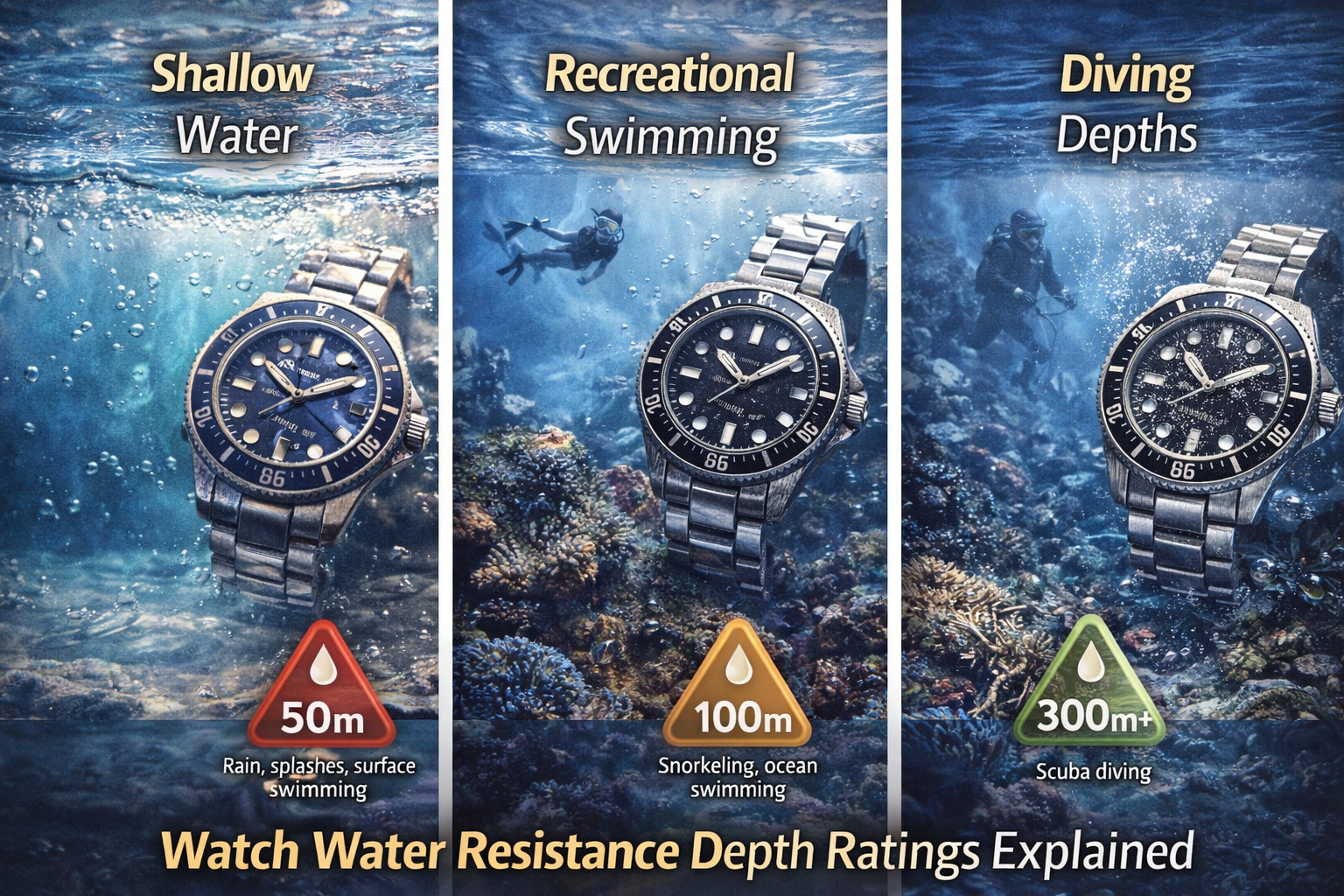 Short Answer: Depth Ratings Are Not Real‑World Depth Limits
A watch rated to 50 meters is not designed to be worn at 50 meters underwater.
Water resistance ratings are measured:
-
In laboratory conditions
-
With static pressure
-
Without heat, movement, or impact
Real‑world use introduces variables that dramatically reduce effective resistance.Misinterpreting depth ratings is one of the most common watch care mistakes that leads to preventable moisture damage.
What Water Resistance Testing Really Measures
Static Pressure vs Real Use
During testing, watches are exposed to:
-
Still water
-
Gradually applied pressure
-
Short test durations
In real life, water exposure involves:
-
Arm movement
-
Temperature changes
-
Steam and sweat
-
Aging seals
This is why depth ratings must be interpreted conservatively.
Common Watch Water Resistance Ratings Explained
30m / 3 ATM
Suitable for:
-
Hand washing
-
Light rain
Not suitable for:
-
Showering
-
Swimming
-
Any prolonged moisture exposure
50m / 5 ATM
Suitable for:
-
Occasional splashes
-
Light surface water
Not suitable for:
-
Hot showers
-
Swimming
-
Water sports
100m / 10 ATM
Suitable for:
-
Swimming in cool water
-
Surface water activities
Still avoid:
-
Saunas
-
Hot tubs
-
Steam rooms
200m+ / Dive Watches
Designed for:
-
Sustained water exposure
-
Pressure changes
Still not designed for:
-
Extreme heat
-
Steam environments
Water resistance does not equal heat resistance.
Why Heat and Steam Defeat Water Resistance
Heat causes:
-
Gasket expansion and contraction
-
Reduced seal elasticity
-
Easier steam penetration
This explains why watches often fog after showers, saunas, or hot tubs, even when rated for water resistance.This is why wearing a watch in the shower introduces risks that water resistance ratings were never designed to handle.
How Water Resistance Changes Over Time
Water resistance is not permanent.
It degrades due to:
-
Gasket aging
-
Crown usage
-
Impacts and shocks
-
Improper storage
Regular use shortens effective resistance — even if the watch appears fine externally.As water resistance degrades with age, regular servicing becomes essential to maintain seal integrity and internal protection.
How to Use Water Resistance Ratings Correctly
Safe habits include:
-
Treat ratings as maximums, not guarantees
-
Avoid heat + moisture combinations
-
Test water resistance during servicing
-
Remove watches before showers and saunas
Correct interpretation prevents most water‑related failures.
Conclusion
Water resistance ratings are guidelines, not promises. Understanding how they are tested — and how they fail — allows you to use your watch safely without unnecessary risk.
When combined with good daily habits and proper servicing, water resistance becomes a useful tool rather than a source of confusion.