Is It Safe to Wear a Watch in the Sauna or Hot Tub? Heat Damage Explained (2026)
Many watch owners assume that if a watch can handle water, it can also handle heat — but this assumption leads to some of the most expensive and irreversible damage.
In this guide, we’ll explain what extreme heat does to a watch, why saunas and hot tubs are especially dangerous, and what habits can protect your watch long
term.Extreme heat exposure highlights why everyday watch care habits are essential for protecting both appearance and long-term performance.
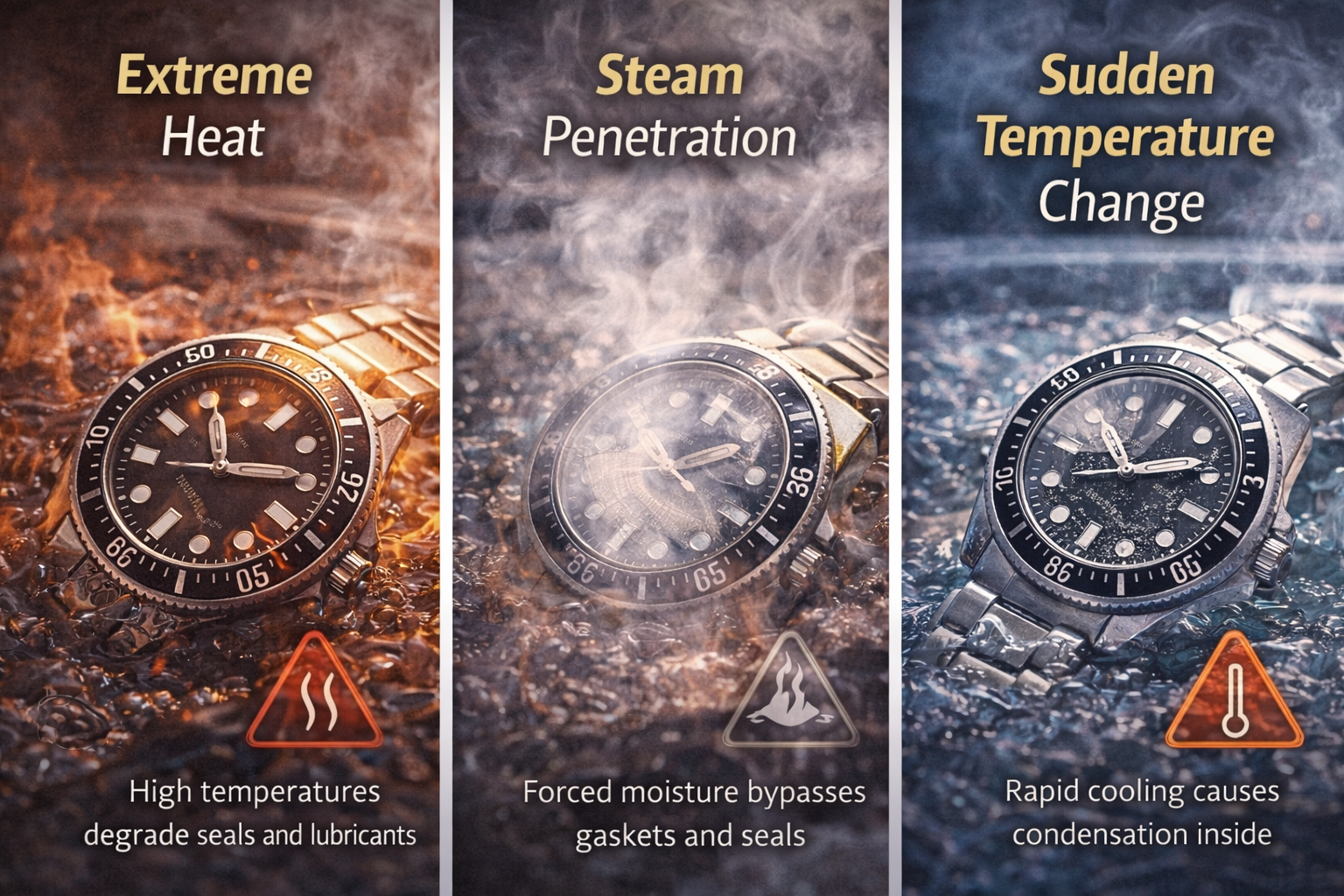 Short Answer: No, You Should Not Wear a Watch in a Sauna or Hot Tub
Even highly water-resistant watches are not designed for extreme heat.
Saunas and hot tubs expose watches to:
-
High temperatures
-
Rapid temperature changes
-
Steam and humidity
This combination accelerates seal failure, lubricant breakdown, and internal corrosion.
Why Heat Is More Dangerous Than Water
1. Extreme Heat Breaks Down Lubrication
Mechanical watches rely on precise lubrication. High temperatures:
-
Thin watch oils
-
Cause oils to migrate
-
Speed up evaporation
Once lubrication degrades, internal friction increases rapidly.
2. Rapid Temperature Changes Stress the Case
Moving from a hot sauna into cooler air or water causes:
-
Sudden metal contraction
-
Micro-gaps around seals
-
Increased moisture intrusion
Repeated thermal shock weakens gasket integrity over time.
3. Steam Penetrates Where Water Cannot
Steam particles are smaller than liquid water droplets and can:
-
Pass aging gaskets
-
Condense inside the case
-
Leave moisture trapped after cooling
This is why fogging often appears after heat exposure.Just like shower steam, sauna environments expose watches to heat and moisture that penetrate seals far more easily than liquid water.
Are Dive Watches or Sports Watches Safe?
Dive and sports watches are designed for:
-
Water pressure
-
Cold or neutral temperatures
They are not designed for:
-
Saunas
-
Hot tubs
-
Steam rooms
High heat environments fall outside their engineering limits.Assuming a watch is heat-safe simply because it is water-resistant is one of the most common watch care mistakes owners make.
Signs Heat Has Already Damaged Your Watch
Watch for:
-
Fogging under the crystal
-
Sudden accuracy changes
-
Reduced power reserve
-
Crown stiffness
If these appear after heat exposure, professional inspection is strongly recommended.
Safe Alternatives to Wearing a Watch in Heat
Better habits include:
-
Removing your watch before entering a sauna or hot tub
-
Letting it cool gradually at room temperature
-
Storing it in a dry, shaded place
A few minutes of caution can save years of wear.
Heat, Sweat, and Showering: A Combined Risk
Heat damage rarely happens in isolation. It often combines with:
-
Sweat exposure
-
Steam from showers
-
Improper storage
These factors compound each other, shortening both performance lifespan and service intervals.
Conclusion
Saunas and hot tubs may feel harmless, but for watches they represent one of the harshest environments imaginable. Heat, steam, and rapid temperature change quietly accelerate wear long before visible damage appears.
Removing your watch before heat exposure is one of the simplest and most effective habits you can adopt to protect its longevity.