How Often Should You Service a Mechanical Watch? A Practical Maintenance Timeline (2026)
How often should you service a mechanical watch?
Some people wait too long and end up with worn movements. Others service too frequently and waste money on unnecessary work. The truth lies somewhere in between.
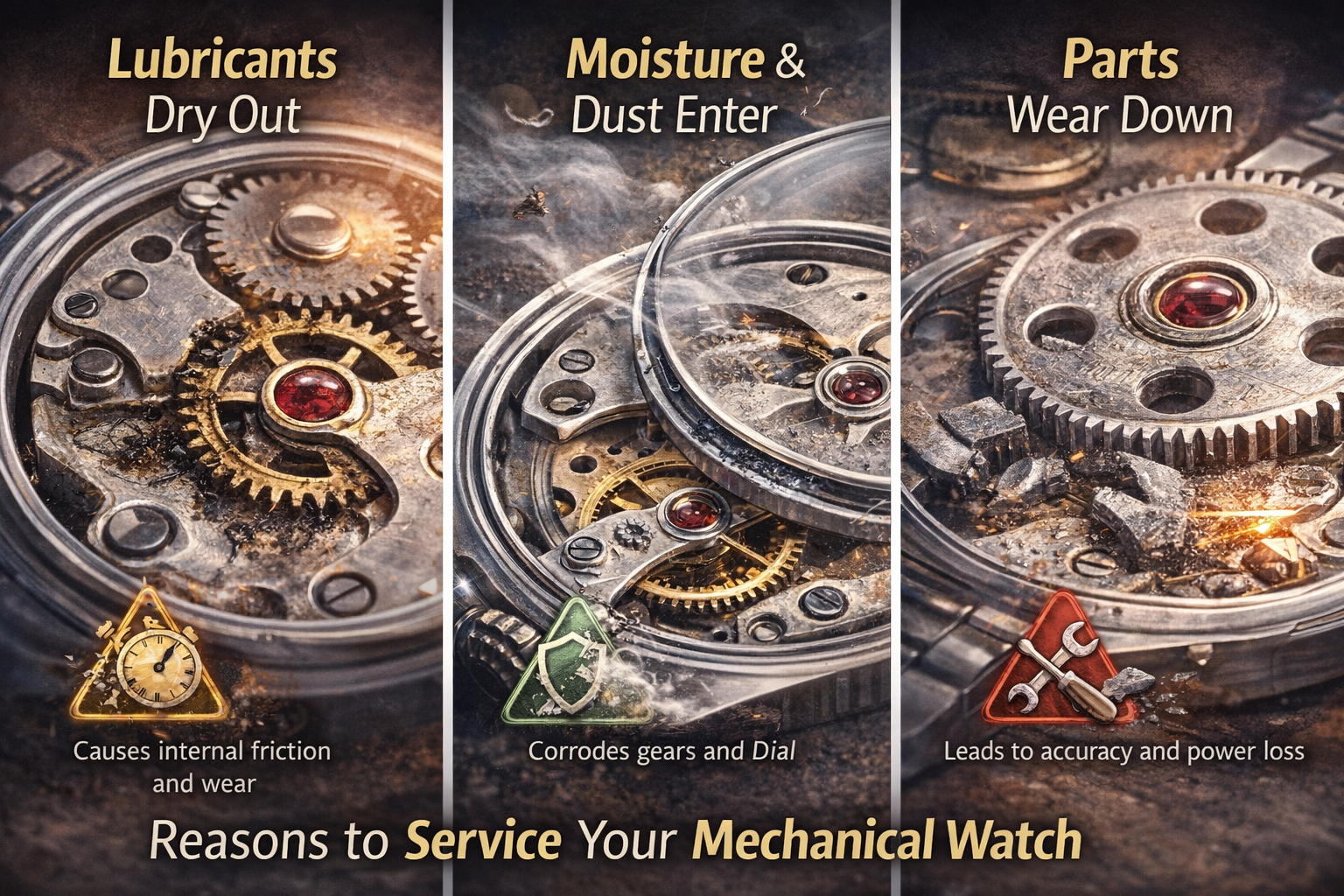 This guide explains a realistic service timeline, what actually happens inside a mechanical watch over time, and how to know when service is truly needed.Regular servicing works best when combined with proper daily habits, which is why understanding everyday watch care plays such an important role in long-term mechanical reliability.
Short Answer: Every 5–7 Years (For Most Mechanical Watches)
For the majority of modern mechanical watches, a full service every 5–7 years is the safest general rule.
However, this interval is not fixed. It depends on:
-
How often the watch is worn
-
Daily care habits
-
Storage conditions
-
Exposure to water, heat, and shocks
Mechanical watches age based on use and environment, not just time.
What “Servicing a Mechanical Watch” Actually Means
A proper mechanical watch service includes:
-
Complete movement disassembly
-
Cleaning of all components
-
Replacement of worn parts
-
Fresh lubrication
-
Gasket replacement
-
Water resistance testing
-
Accuracy regulation
Skipping service doesn’t stop the watch from running — it allows invisible wear to continue unchecked.
Why Mechanical Watches Need Regular Service
1. Lubricants Dry Out Over Time
Many premature service issues can be traced back to common watch care mistakes that accelerate internal wear without the owner realizing it.
Even the best oils degrade due to:
-
Friction
-
Heat
-
Age
Once lubrication fails, metal parts grind against each other, accelerating wear.
2. Moisture & Dust Slowly Enter the Case
Daily habits such as wearing a watch in the shower introduce heat and moisture that significantly shorten gasket life and service intervals.
Even without obvious water exposure, moisture can enter through:
-
Aging gaskets
-
Crown usage
-
Temperature changes
This is why habits like showering with a watch or improper storage shorten service intervals.
3. Wear Is Gradual — Until It Isn’t
Mechanical damage rarely happens suddenly. It accumulates quietly, then becomes expensive to fix.
Regular service is preventative, not reactive.
Service Timeline by Usage Type
Daily-Worn Mechanical Watches
-
Service every 5 years
-
Shorter intervals if exposed to water, sweat, or heat
Occasionally Worn Watches
-
Service every 6–7 years
-
Wind periodically and store properly when not worn
Vintage or Heavily Used Watches
-
Inspection every 3–4 years
-
Service as recommended by a professional
Signs Your Watch Needs Service Sooner
Don’t wait for the full interval if you notice:
-
Loss of accuracy
-
Shortened power reserve
-
Fogging under the crystal
-
Unusual noises
-
Crown stiffness
These are warnings, not inconveniences.
Service vs “It Still Runs” Thinking
A mechanical watch can continue running long after damage has begun.
This mindset — waiting until failure — often leads to:
-
Higher repair costs
-
Permanent part replacement
-
Reduced movement lifespan
Servicing on time preserves value.
How Daily Care Extends Service Intervals
Good habits matter.
Proper daily care, avoiding steam exposure, and storing watches correctly can extend service intervals by years.
Mechanical longevity is built on consistent, small decisions.
Conclusion
Servicing a mechanical watch isn’t about fear or marketing — it’s about timing.
For most owners, a 5–7 year service cycle, combined with proper care and storage, offers the best balance between cost, performance, and longevity.
Understanding service intervals helps you protect not just how your watch runs today, but how it will run decades from now.
When servicing, daily care, and storage work together, they form a complete watch care system that protects both performance and long-term value.