Can You Swim With a Watch? Pool vs Ocean Water Risks Explained (2026)
Pool water and ocean water create very different risks, and misunderstanding those differences is one of the most common causes of preventable watch damage.
In this guide, we explain whether you can safely swim with a watch, how chlorine and salt affect watch components, and what precautions actually matter.
 Short Answer: It Depends on the Watch and the Water
You can swim with some watches — but only under the right conditions.
Safe swimming depends on:
-
Water resistance rating
-
Gasket condition
-
Water temperature
-
Type of water (pool vs ocean)
Water resistance ratings alone do not guarantee safety.Understanding how water resistance ratings are tested helps clarify why swimming safety depends on more than just the number printed on the dial.
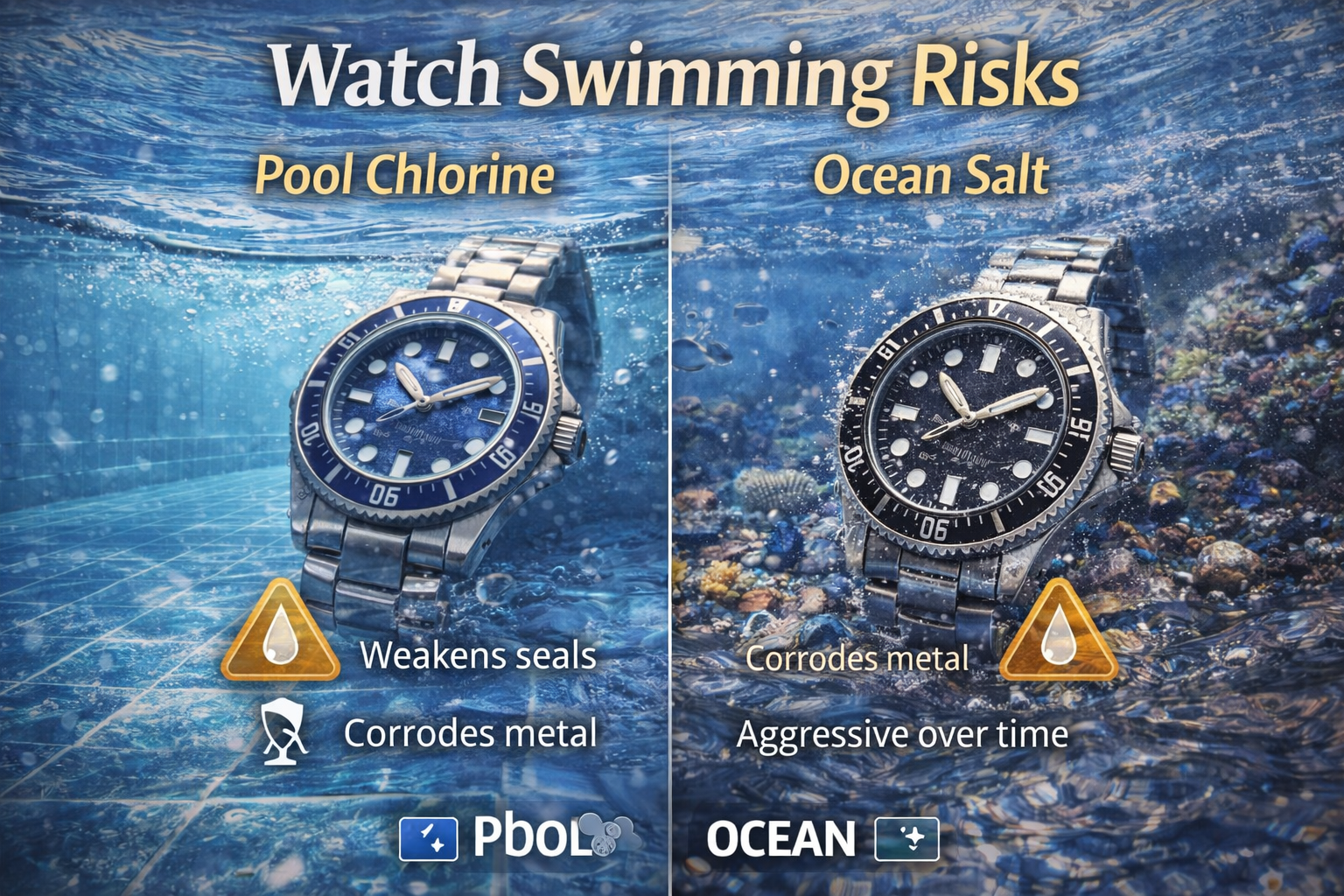
Swimming Pool Risks: Chlorine Exposure
Chlorinated pool water can:
-
Degrade rubber gaskets
-
Fade bezels and inserts
-
Accelerate corrosion over time
While brief exposure is usually manageable for 100m+ watches, frequent pool swimming shortens seal lifespan.
Ocean Swimming Risks: Salt Corrosion
Saltwater is more aggressive than fresh water.
It can:
-
Promote corrosion on stainless steel
-
Build up between bracelet links
-
Damage spring bars
Salt residue left uncleaned after swimming is one of the most overlooked risk factors.
30m / 50m
Not recommended for swimming.
100m
Generally safe for surface swimming in cool water.
200m+
Suitable for regular swimming and snorkeling — with proper maintenance.
Regardless of rating, avoid:
-
Hot pools
-
Rapid temperature changes
-
Jumping from high surfaces
Heat + Swimming = Increased Risk
Warm pools, heated spas, and hot climates introduce:
-
Gasket expansion
-
Steam exposure
-
Faster lubricant degradation
Heat dramatically reduces effective water resistance.Just like sauna exposure, heated pools create temperature stress that weakens seals over time.
After-Swim Care: What You Should Always Do
Immediately after swimming:
-
Rinse the watch with fresh water
-
Dry with a microfiber cloth
-
Avoid operating the crown while wet
Proper aftercare prevents long-term corrosion and seal damage.
Signs Swimming Has Caused Damage
Watch for:
-
Fogging under the crystal
-
Rust near the crown
-
Bracelet stiffness
-
Reduced accuracy
If fog appears, stop wearing the watch and seek inspection.Overestimating a watch’s water resistance is one of the most common mistakes owners make.
Conclusion
Swimming with a watch is possible — but only when you understand both the rating and the environment.Overestimating a watch’s water resistance is one of the most common mistakes owners make.
Chlorine, salt, and heat all affect watches differently. With proper precautions and post-swim care, most water damage is preventable.
Knowing the difference between pool and ocean exposure helps protect both performance and long-term value.