100m vs 200m Water Resistance: Do You Really Need a Dive Watch?
This guide explains the practical differences between 100m and 200m ratings, when each makes sense, and whether you truly need a dive watch.
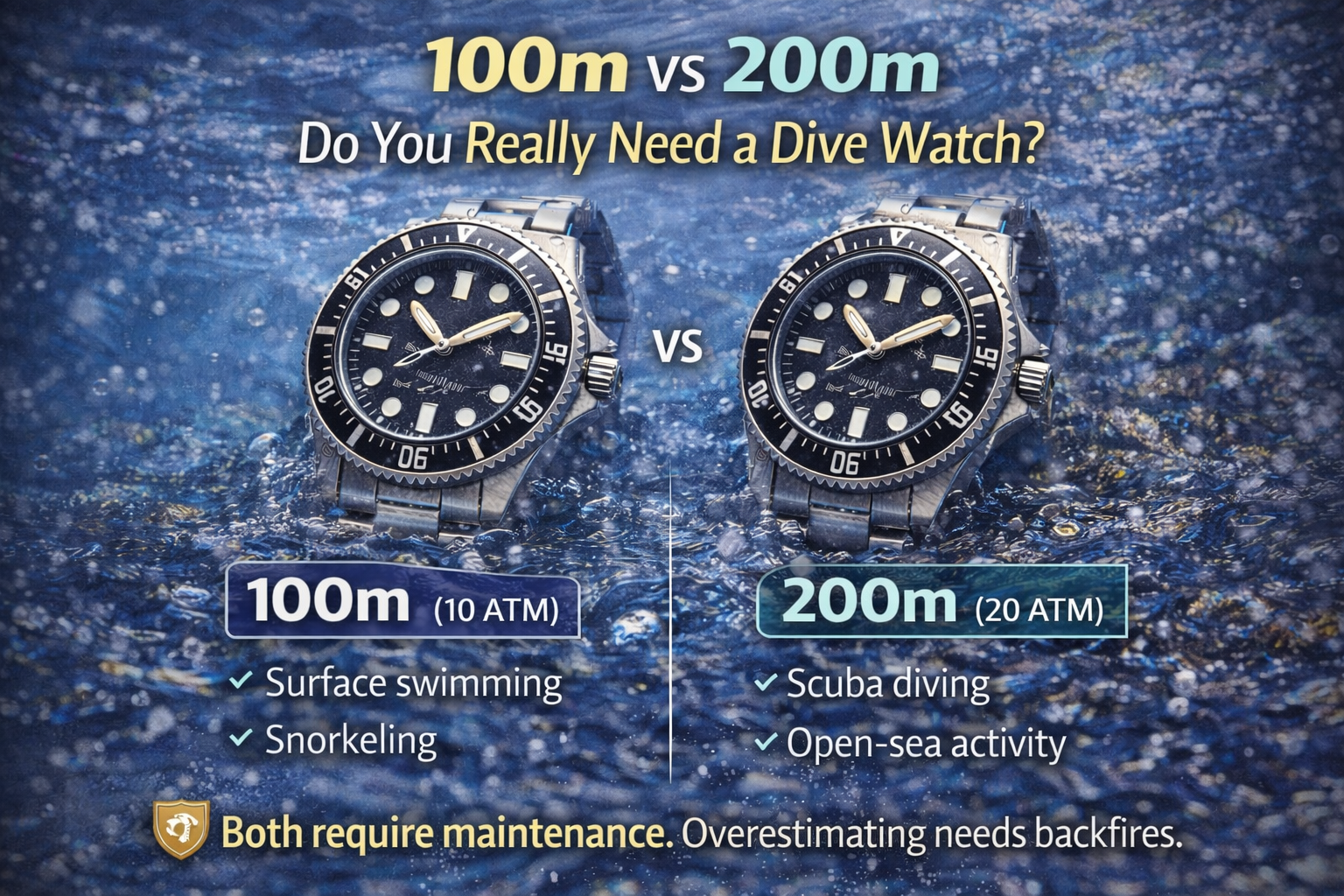 Short Answer: 100m Is Enough for Most People
For everyday users, 100m water resistance is sufficient.
It covers:
-
Surface swimming
-
Pool use
-
Ocean swimming
-
Snorkeling
Only specialized diving activities require 200m+.
If you’re unsure how depth ratings actually work, read our full breakdown of
👉 watch water resistance explained.
What 100m Water Resistance Really Means
A 100m (10 ATM) rating generally supports:
-
Recreational swimming
-
Shallow water activity
-
Rain and daily exposure
It provides a comfortable safety margin over 50m.
If you're considering whether 50m is enough, see:
👉 Is 50m Water Resistance Enough?
For most non-divers, 100m already exceeds daily needs.
What 200m Water Resistance Adds
A 200m rating typically includes:
-
Screw-down crown
-
Thicker case construction
-
Reinforced gaskets
-
ISO dive certification (in many models)
This is designed for:
-
Scuba diving
-
Extended underwater exposure
-
Higher pressure conditions
However, 200m does not mean immune to heat or steam.
Even dive watches should not be worn in environments like
👉 saunas or hot tubs.
Real-World Use: Do You Actually Dive?
Ask yourself:
-
Do I scuba dive regularly?
-
Do I need ISO-certified equipment?
-
Am I frequently underwater beyond surface level?
If the answer is no, 200m may be unnecessary over-engineering.
Many buyers choose 200m for psychological security — not functional need.
100m vs 200m for Swimming
For pool or ocean swimming, both ratings are generally safe.
However, water environment matters:
-
Chlorine affects gaskets
-
Salt accelerates corrosion
-
Heat reduces seal effectiveness
If you swim often, read:
👉 Can You Swim With a Watch? Pool vs Ocean Explained
Maintenance matters more than rating alone.
The Hidden Factor: Seal Condition Over Rating
A 200m watch with degraded gaskets is less safe than a well-maintained 100m watch.
Water resistance declines due to:
-
Gasket aging
-
Crown wear
-
Impacts
-
Heat exposure
Servicing ensures the rating still holds true.
Learn about proper intervals here:
👉 How Often Should You Service a Mechanical Watch?
When 200m Actually Makes Sense
200m is ideal if you:
-
Scuba dive
-
Frequently snorkel in open ocean
-
Want maximum structural durability
-
Prefer the aesthetic of dive watches
For everyone else, 100m is already highly capable.
The Marketing Effect
Many brands push 200m because:
-
It sounds more impressive
-
It signals toughness
-
It aligns with dive-watch heritage
But in real life, usage patterns matter more than numbers.
Overestimating needs is one of the most common
👉 watch care mistakes.
Conclusion
For most watch owners, 100m water resistance is more than sufficient.
200m ratings are valuable for divers and heavy water users — but unnecessary for typical daily wear.
The smarter decision is choosing the rating that matches your lifestyle, maintaining it properly, and avoiding misuse.
Water resistance is a tool — not a marketing badge.